
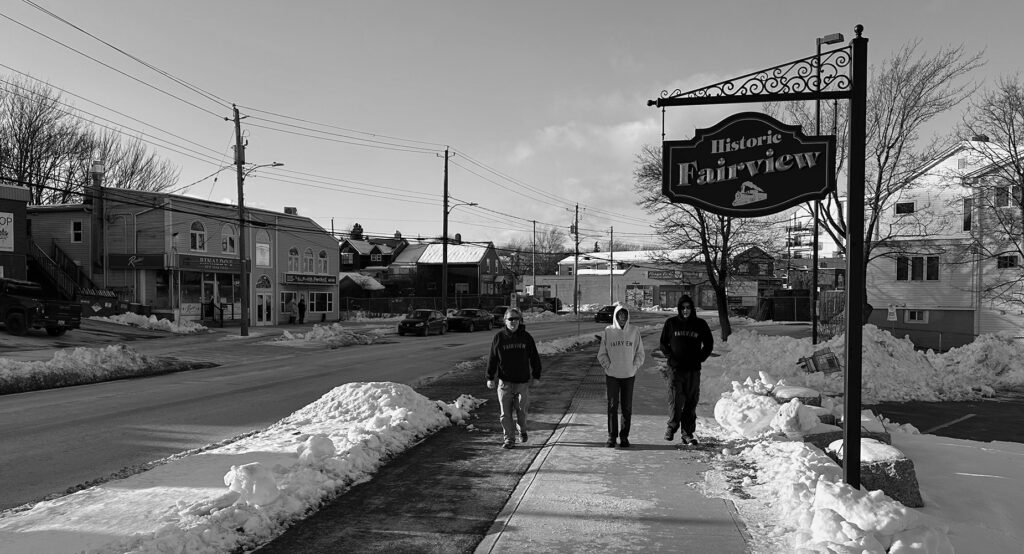
The History of Fairview
Fairview is a community within the urban area of Halifax in Nova Scotia, Canada.
Prior to European colonization, the Mi’kmaq lived on the land for thousands of years.
In the 1750s, many of the Foreign Protestants settled in the area. First known as the Westerwald (“western forest”), the settlement was called the Dutch Village by non-German locals. Some of the passengers of the Foreign Protestant ships settled temporarily in the Dutch Village while they waited for a more permanent settlement in Lunenburg County.
In the early 20th century, most of the current street network in the area was established. It formed a regular grid pattern up the eastern slope of Geizers Hill, facing toward the Bedford Basin and the Halifax peninsula.
After World War I, the railway lines in the Fairview area came under control of Canadian National Railways. Canadian National Railways established its new locomotive servicing shops and roundhouse for the Halifax area in the community, which was named Fairview Station on 1 March 1921. Until the 1950s, the majority of Fairview’s residents were employed by the railway.
The community name was shortened to Fairview on 19 January 1956.
In 1958, Fairview became home to Halifax West Municipal High School (later changed to Halifax West High School in 1969), located on Dutch Village Road.
In the early 1960s, to construct the inner-urban portion of Highway 102, all of the homes on School Avenue’s southern side were appropriated—and subsequently demolished—by the province. School Avenue itself is still owned by the province of Nova Scotia and is the only civic street in the area not under municipal authority.
Through the 1960s, Fairview continued to fill in and its housing densified. During the late 1960s and early 1970s, Fairview developed into a major shopping destination after Halifax’s first suburban shopping mall, the Bayers Road Shopping Centre, was constructed.
In 1969, the City of Halifax annexed the communities of Armdale, Clayton Park, Fairview, Rockingham, and Spryfield.
Newer residential developments in outlying areas during the 1970s-1990s, such as the modern development in adjacent Clayton Park, along with a demand by families for larger homes, saw Fairview’s working-class neighbourhoods of smaller homes become a less desirable location over time. The last subdivision to be completed in the community was Keystone Court in 1990.
On 1 April 1996, Halifax County was dissolved and all of its places (cities, suburbs, towns, and villages) were turned into communities of a single-tier municipality named Halifax Regional Municipality. Subsequently, Fairview turned into a community within the new Municipality of Halifax.
In honour of the original settlement, a section of Dutch Village Road—which had been an exit to Highway 102—was renamed Westerwald Street in November 2002. Dutch Village Road/Westerwald Street now form the main commercial street at the foot of Fairview’s slope, the corner of Westerwald Street, Bayers Road to the basin end of Joseph Howe Drive.
Source: Wikipedia
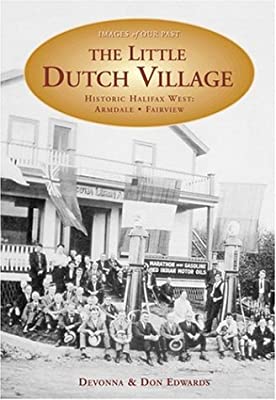
For more information on the history of Fairview, check out “The Little Dutch Village” by Devonna and Don Edwards (NIMBUS Publishing)
Copyright © Fairview Legend Wear 2026 . All rights reserved
Celebrating the Legends of Fairview